
Nerd out on parachute tech
The Evolution and Mechanics of Modern Parachute Systems
Parachute technology has seen significant advancements in both design and materials over the past several decades. Earlier parachute systems, such as round canopies and the first ram-air designs, deployed very quickly, which often resulted in substantial opening shock. In contrast, modern parachute systems utilize advanced principles of aerodynamics, innovative fabric engineering, and refined deployment controls. These improvements enable a much more gradual and predictable inflation sequence, enhancing both safety and comfort for users.
Canopy Types and Their Design Objectives
Contemporary parachute canopies are engineered to meet specific operational requirements. Tandem main canopies, which typically measure between 340 and 400 square feet, are designed to provide high lift, stability, and soft openings. These canopies support two jumpers with a combined exit weight ranging from 400 to 500 lbs. With relatively low wing loading, tandem canopies offer gentle flight characteristics and slow descent rates.

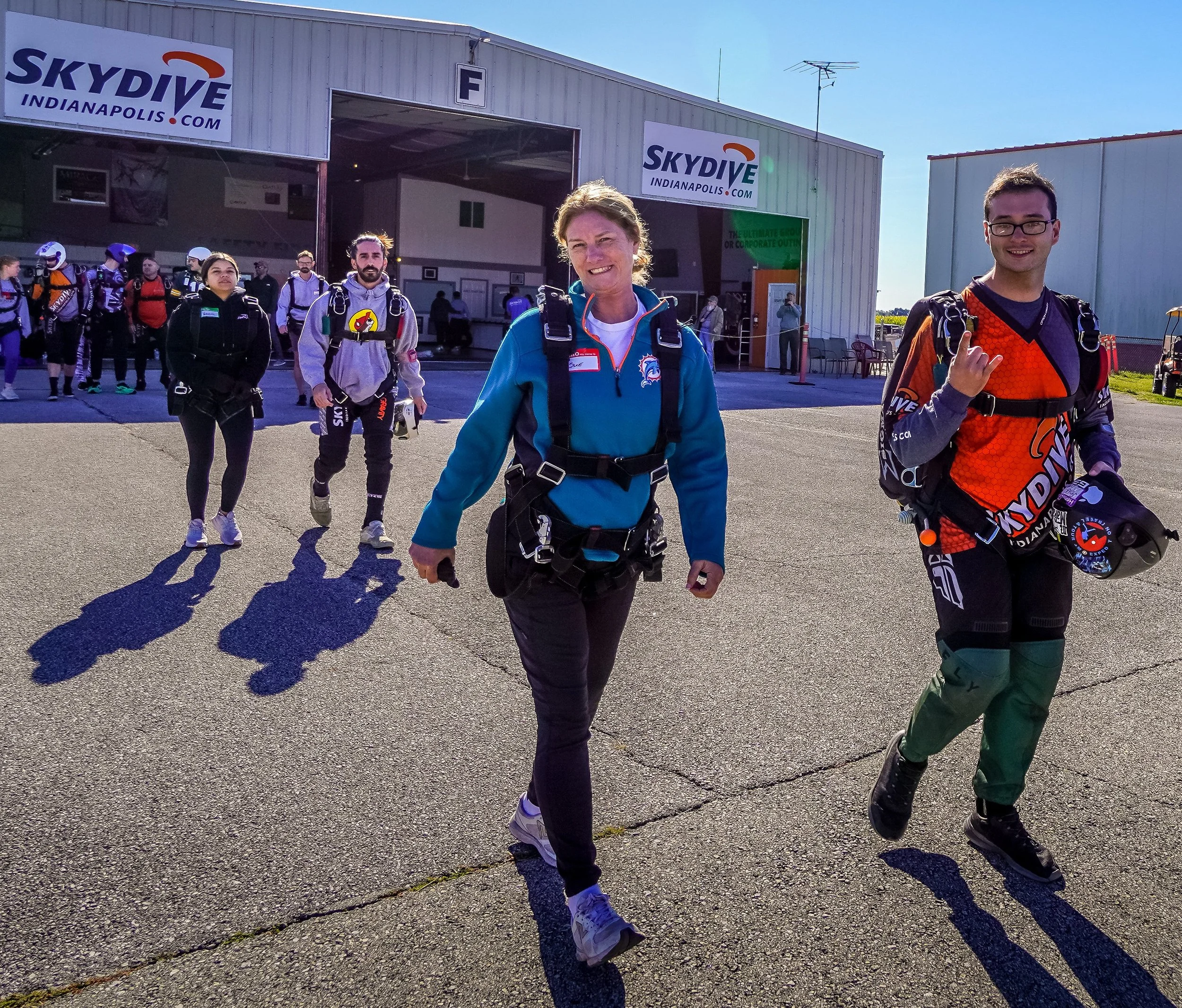
Tandem skydive pair ready for exit.
Student or transitional canopies, usually between 230 and 300 square feet, focus on delivering high stability and forgiving handling. Their design typically features moderate aspect ratios and lightly tapered cells, resulting in predictable recovery arcs and wide margins for error, which are essential for inexperienced jumpers.
Reserve canopies are constructed to meet strict certification standards, such as TSO-C23D or C23F. These canopies are optimized for rapid deployment and reliable inflation across a wide range of conditions, including low-altitude jumps or unstable body positions. They are made with stronger fabrics, like zero-porosity 1.1 oz ripstop nylon, and feature reinforced line attachment points to withstand the intense opening forces experienced during emergency deployments.
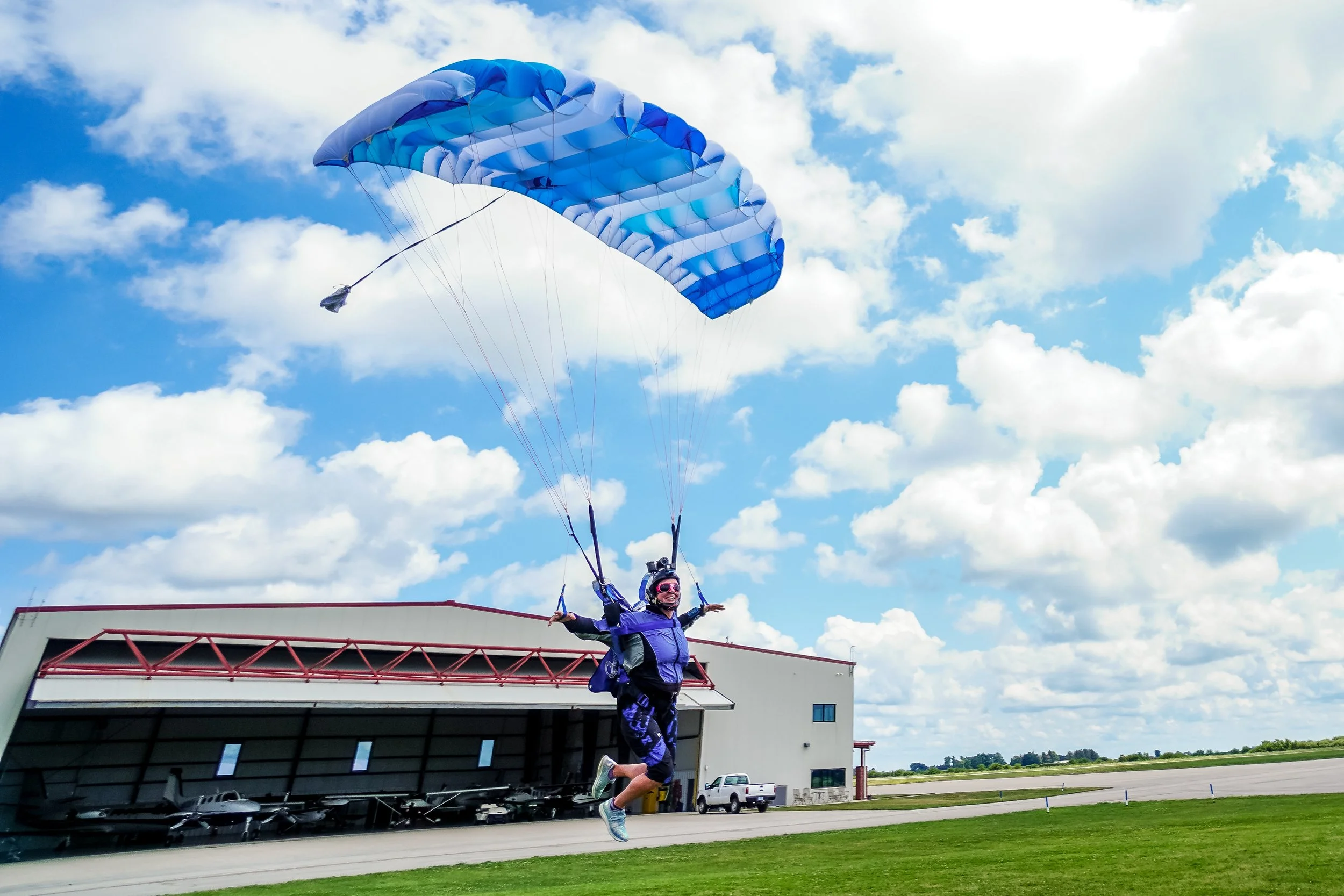
High performance parachute
High-performance canopies, often less than 150 square feet, incorporate higher aspect ratios, thinner airfoils, and steeper trim angles to achieve greater glide and maneuverability. These characteristics make them suitable only for experienced canopy pilots who can handle the increased descent rates and dynamic flight responses that they produce.
Deployment Sequence and Dynamics
The deployment of a modern ram-air parachute involves several distinct phases: bag extraction, line stretch, snivel, and full inflation.
· Bag Extraction: The pilot chute generates drag, pulling the deployment bag out of the container.
· Line Stretch: The suspension lines extend fully, allowing the canopy to begin un-stowing from the bag.
· Snivel Phase: Air enters the canopy’s cells through the leading-edge inlets, causing gradual inflation. This phase typically lasts 3 to 6 seconds for tandem systems, during which descent speed decreases from terminal velocity (approximately 120 mph) to canopy flight speed (about 15–20 mph).
· Full Inflation: The canopy reaches full pressurization, and line tension stabilizes, marking the transition to steady canopy flight.
The Role of the Slider in Inflation Control
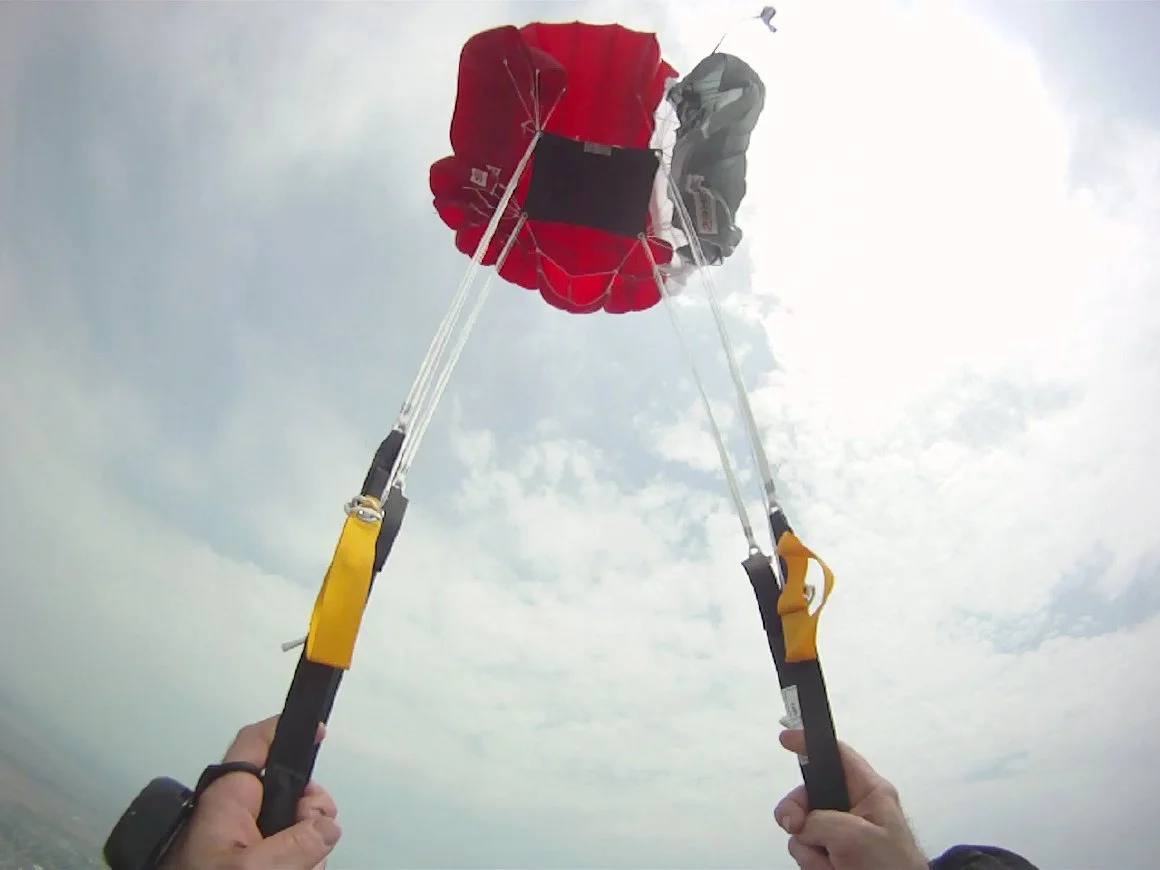
The slider in action
A key component in controlling the canopy’s inflation rate is the slider—a reinforced rectangular panel equipped with grommets through which each group of suspension lines passes. As the canopy inflates, the slider descends along the lines, generating friction and momentary drag that slows the expansion of the canopy. The slider’s size, material porosity, and grommet diameter are all precisely engineered to balance the speed of deployment and the force of opening. Tandem systems utilize larger, non-collapsible sliders to ensure consistent and controlled openings, even under higher load factors.
Comparison with Military Static-Line Systems
Military static-line parachutes, which are generally round or cruciform in shape, deploy almost instantaneously upon exit from the aircraft due to the static line’s direct activation of the canopy. These systems are optimized for low-altitude operations and immediate inflation, prioritizing rapid deployment over comfort or forward flight capability. In contrast, sport ram-air parachute systems are designed to provide stability, efficient glide, and controlled openings at higher altitudes.
Conclusion: The Intersection of Technology and Safety
Modern parachute design represents a convergence of aerodynamics, material science, and human factors engineering. Innovations such as precision line trim, zero-porosity fabrics, slider control, and improved harness and container systems have resulted in deployments that are safer, smoother, and more consistent than those of earlier generations. Today’s skydivers benefit immensely from these technological advancements, experiencing greater reliability and comfort during jumps.