
Gentle Landings for Tandem Skydivers with Joint Issues
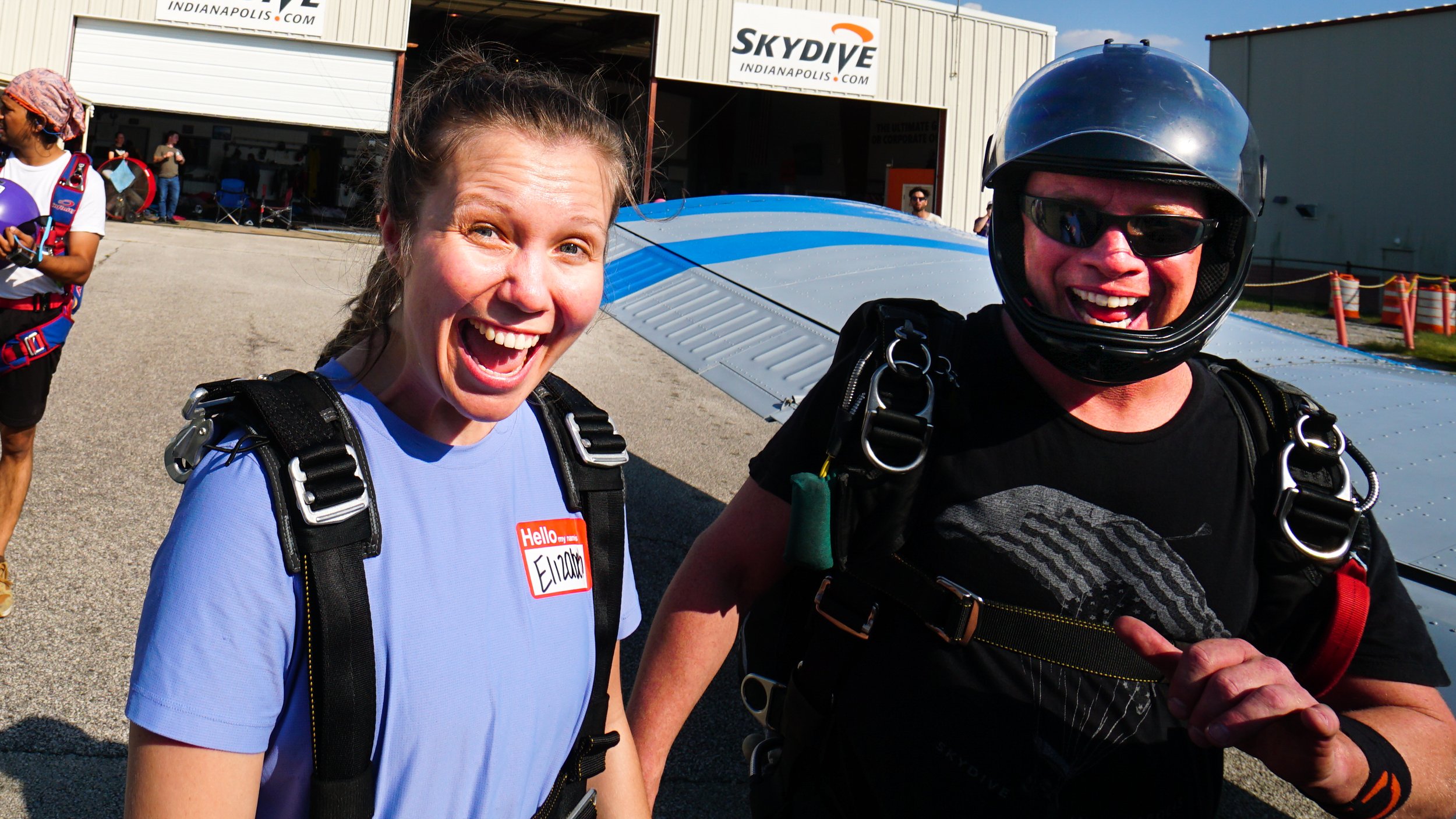
Pre-jump permasmile.
If you have bad knees, ankles, or hips and don’t run anymore, you may wonder how difficult the landing is during a tandem skydive. The good news is that modern tandem skydiving landings are specifically designed to be gentle. You won’t need to run, absorb impact, or “stick” a landing like an athlete. Even for those with joint issues, instructors are trained to help ensure a safe landing that doesn’t put stress on your knees, ankles, or hips.
The Landing: Timing, Technique, and Trust
As you descend under the parachute, your instructor is actively piloting the canopy rather than just riding along. By using the toggles, which are the steering handles, the instructor slows your forward speed, stabilizes your glide, and guides you with precision toward the landing zone. Their main objective is a soft, controlled, and low-impact touchdown.
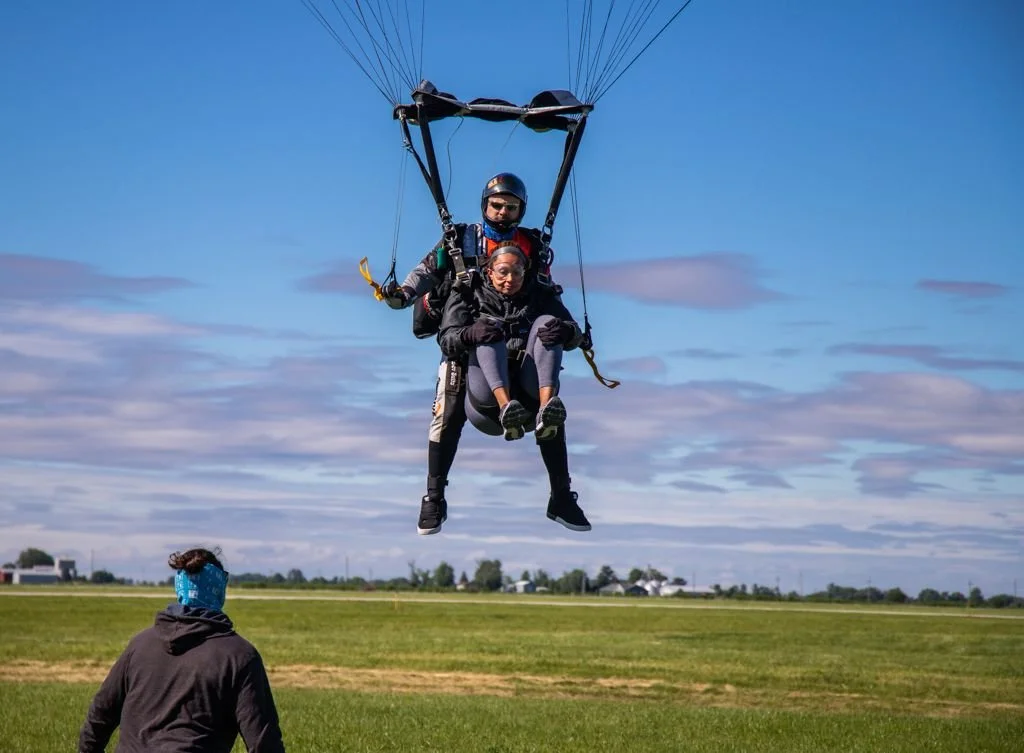
Feet up! Feet up! Feet up!
What Makes the Landing Gentle
The gentle nature of the landing results from the physics of the canopy flare. This maneuver is much like an airplane lifting its nose before touching down. The flare increases drag and dramatically reduces your vertical speed, while also generating a burst of lift that “catches” you and flattens your descent. Instead of dropping onto the ground, you “float” the last few feet before landing.
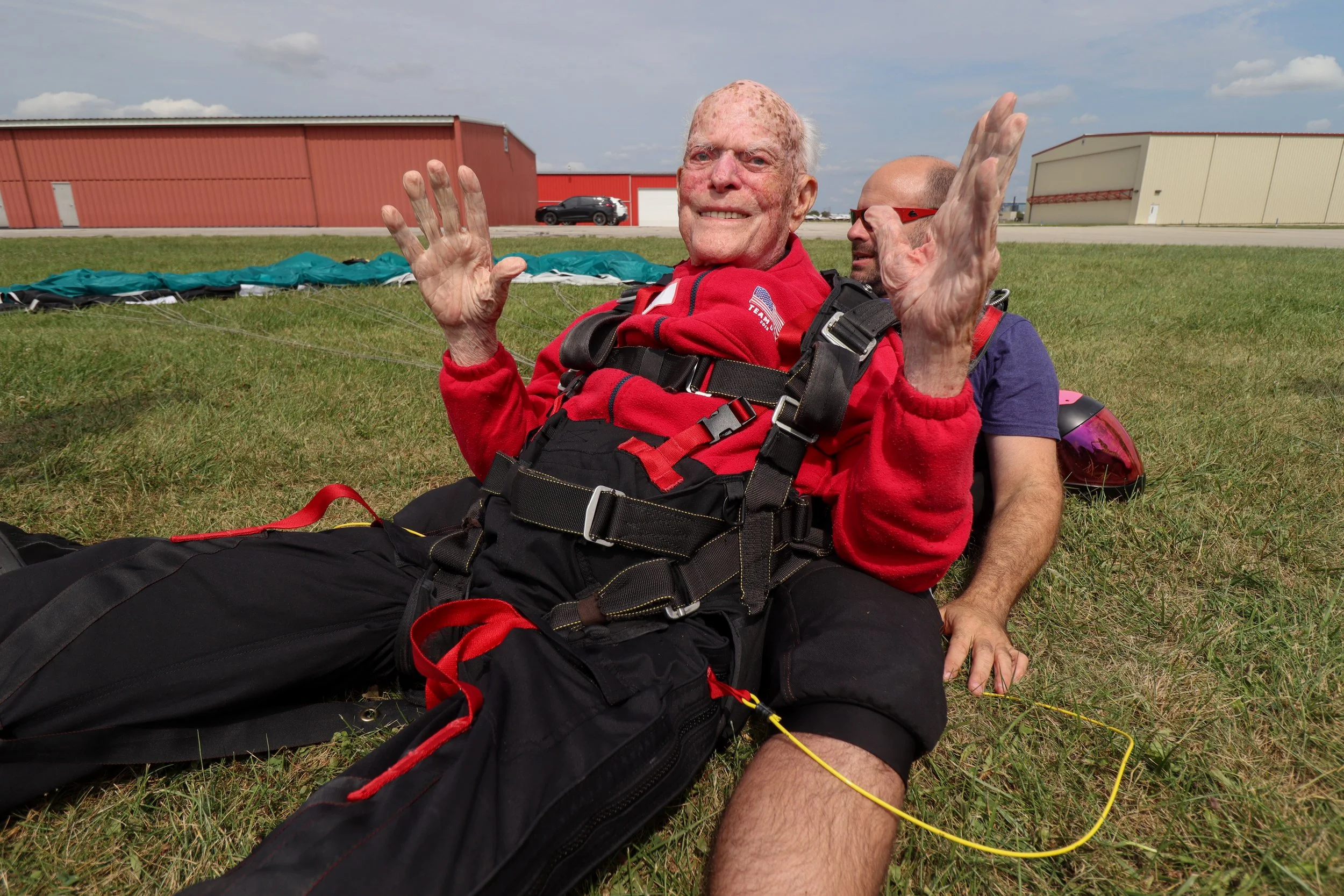
Special assistance tandem landing in the seated position.
· A slow glide onto your butt—this is the most common landing method for people with joint issues.
· A smooth seated slide.
· A light step or two, if you and your instructor agree it’s comfortable.
No Running Required
Because you’re securely attached to a highly experienced tandem instructor, there’s no need for you to run or absorb any impact during landing. In fact, most drop zones ask tandem students not to run, as it is safer and smoother to let the instructor manage the entire process. If you have sensitive joints, inform your instructor ahead of time; they will plan for a slide-in landing that completely avoids pressure on your legs.
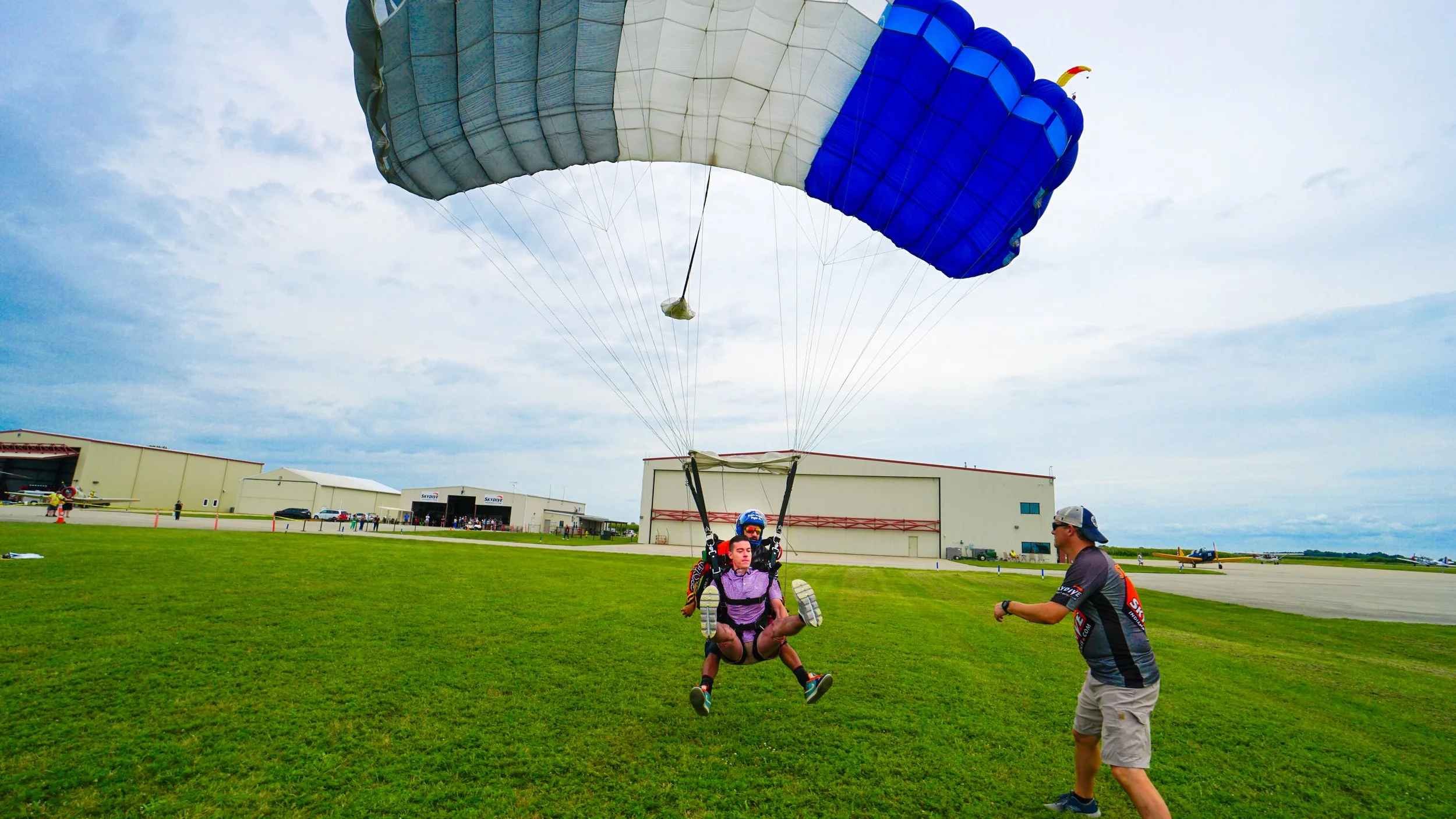
Seated landing technique.
Technique and Experience: The Keys to a Safe Touchdown
Skydiving instructors have performed these types of landings thousands of times. Their expertise in canopy control and timing ensures the touchdown is controlled, predictable, and remarkably gentle. It is the combination of physics (drag and lift), technique (proper flare timing), and trust (allowing the instructor to manage the final moments) that makes the landing feel effortless.