
Will my stomach drop?
Why You Don’t Feel a Stomach Drop When Skydiving (The Science Explained)
If you’ve ever ridden a roller coaster, you know the feeling: that sudden stomach-dropping lurch that makes your insides feel like they’re floating. A lot of first-time skydivers expect the same thing when they jump out of a plane—but the surprise is, you don’t feel it.
In fact, most people describe their first skydive as smooth, almost like floating on air. So what gives? Why does falling from 13,000 feet feel gentler than a 100-foot roller coaster drop?
Let’s break down the science.
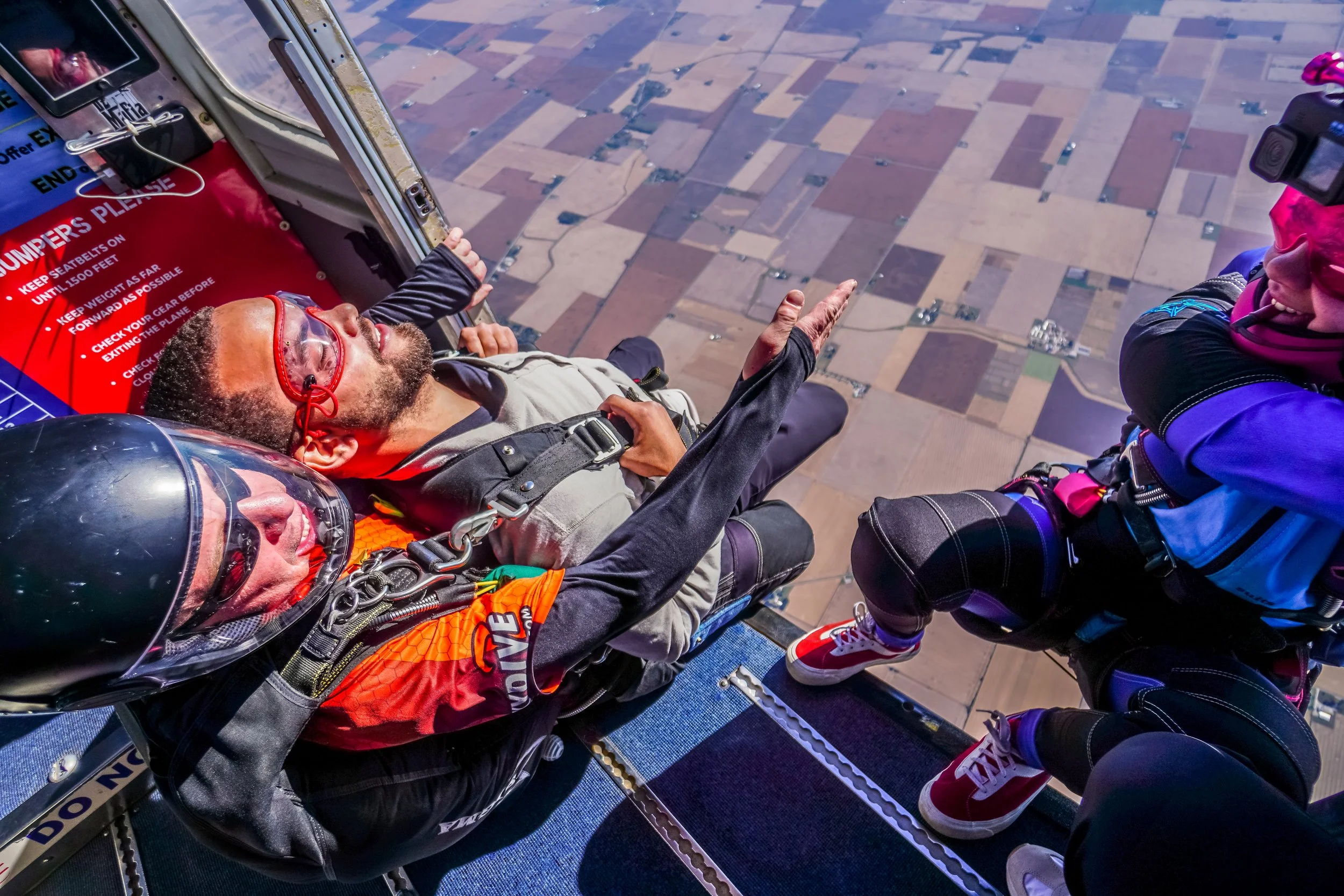
The Stomach-Drop Sensation: What Causes It?
That roller-coaster stomach drop is caused by rapid downward acceleration. More specifically, when your body suddenly shifts from a stable or slow speed into a sharp vertical fall, two things happen:
1. Your vestibular system gets hit with sudden acceleration
The inner ear detects changes in acceleration—not speed itself. A rapid change tells your brain: “We are FALLING!”
2. Your organs lag behind slightly
Your internal organs are mostly suspended in fluid. When your body accelerates downward very quickly, your organs momentarily stay in place, creating that “floating stomach” sensation.
Roller coasters are engineered to create this exact effect.
Skydiving is not.
Why Skydiving Feels Smooth Instead of Stomach-Dropping
1. You exit a plane that’s already moving ~100 mph horizontally
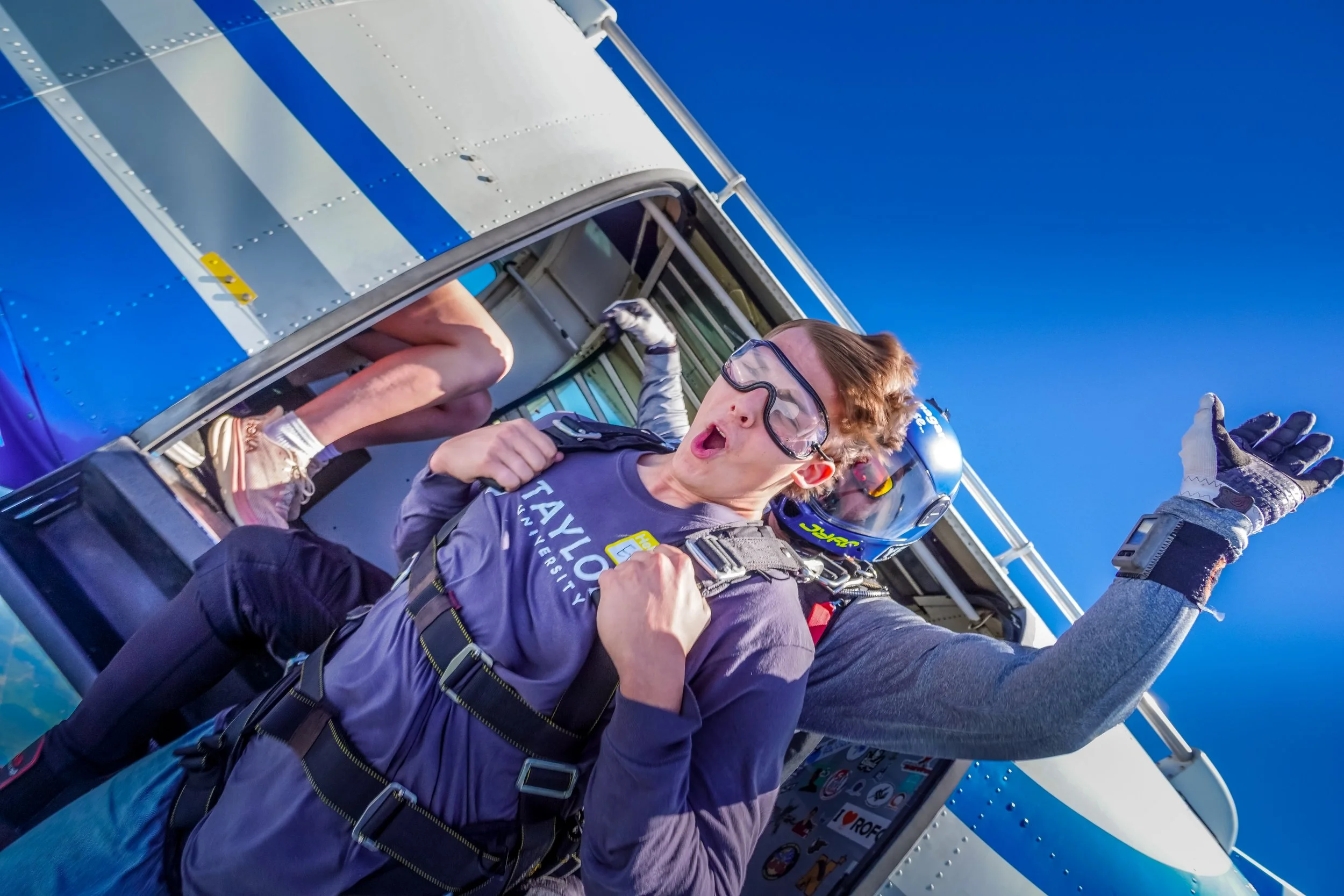
When you leave the aircraft, you don’t go from 0 to 120 mph. You already have horizontal velocity from the aircraft.
Instead of a sudden fall, you simply redirect some of that velocity downward. The shift is so gradual that your body barely registers it.
No big acceleration spike → no stomach drop.
2. Aerodynamic drag builds instantly and reduces acceleration
Unlike a roller coaster drop—where nothing slows you down—air resistance kicks in the moment you exit the plane.
You immediately collide with the airstream, which begins generating drag. This reduces how quickly you accelerate downward.
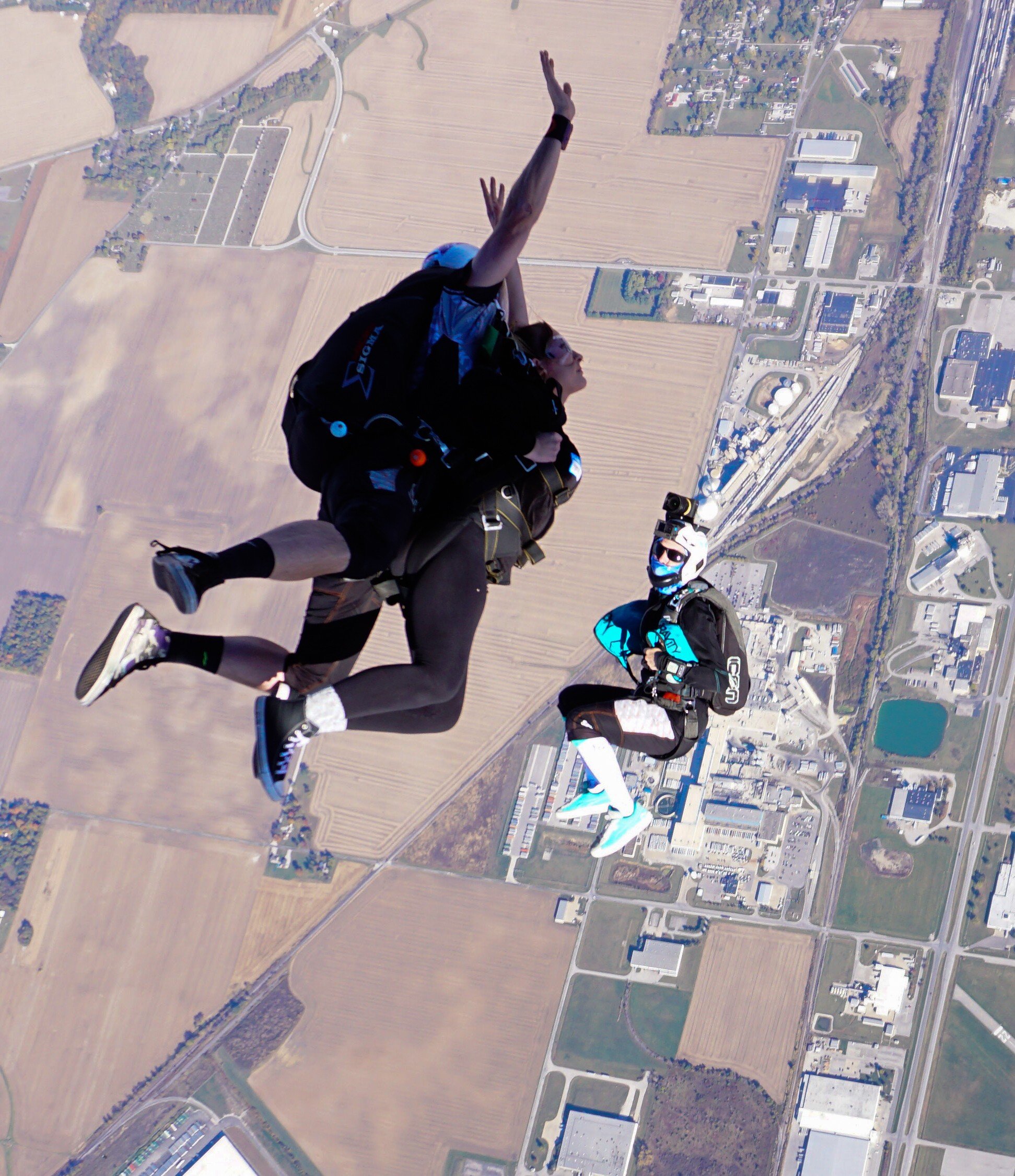
Within just a few seconds, drag and gravity reach a balance, and you fall at terminal velocity, a constant speed. Your body doesn’t perceive constant speed as “falling”—it perceives it as stable motion.
That’s why freefall feels more like flying than dropping.
3. Your inner ear stops sending “falling” signals
Because acceleration decreases so quickly, your vestibular system stops detecting major changes. Freefall becomes a stable environment:
no lurch
no sudden drop
no roller-coaster sensation
Just fast, smooth airflow.
When You Might Feel a Stomach Drop Skydiving
Even though exit and freefall are smooth, there are two situations where you can experience that roller-coaster feeling:
1. High-speed canopy turns
Once the parachute opens, your instructor may perform sharp turns if you’re comfortable with it. These create:
rapid changes in angular velocity
increased g-forces
momentary vertical dips
If you’re sensitive to motion, let your instructor know—your canopy ride can be completely gentle.
2. Jumping from something that isn’t moving (like a balloon)
Hot-air balloon skydives and BASE jumps start from zero horizontal speed. That means:
you go from 0 mph to full gravitational acceleration immediately
drag takes longer to build
the stomach-drop sensation is much more noticeable
This feels much more like a roller coaster—and for some jumpers, that’s exactly why they like it.
The Bottom Line
Despite what your brain might imagine, skydiving doesn’t feel like falling off a cliff.
Because you:
start with horizontal speed
experience gradual downward acceleration
quickly reach a stable freefall velocity
receive fewer “falling” signals from your inner ear
…your body interprets freefall as smooth, steady, and surprisingly comfortable.
If anything, the first time you jump, the biggest sensation isn’t in your stomach—it’s in your mind.